
Who Was Michael Jackson?
Michael Joseph Jackson was born on August 29, 1958, in Gary, Indiana. He became one of the most recognizable performers in modern history, but his beginning was far removed from the enormous stages and worldwide attention that later surrounded him. He grew up in a large family where music became an important part of everyday life. His father, Joseph Jackson, had musical ambitions of his own, while his mother, Katherine, supported music and family life.
Michael was one of several children in the Jackson family who became involved in entertainment. His brothers Jackie, Tito, Jermaine and Marlon formed the core of the group that became known as the Jackson 5, with Michael eventually becoming its lead singer. He began performing while still very young. The Songwriters Hall of Fame describes him as having entered professional performance as a five-year-old and becoming the Jackson 5's lead singer at around ten. 1
That early beginning shaped almost everything that followed. Michael learned to sing, dance, rehearse, perform and respond to an audience before he had experienced an ordinary childhood in the way most people understand it. His extraordinary professional discipline became one of his strengths, but the demands placed on a child performer also became part of the complicated story of his life.
Childhood in Gary, Indiana
Gary was an industrial city in Indiana, and the Jackson family lived in a working-class environment. The family home was filled with children, responsibilities and music. Michael's early environment did not look like the glamorous world he would later inhabit. His professional path developed through rehearsals and local performances before the family group reached national audiences.
The young Michael showed an unusual ability to communicate emotion through his voice. That ability mattered because singing as a child is not simply a matter of having a pleasant voice. A successful performer has to make listeners believe the emotion being expressed. Michael could do that with remarkable consistency.
The family worked toward the same goal, but their success also created pressure. The story of Michael's childhood is therefore best understood in two ways at the same time. On one side was extraordinary opportunity: music gave him a career, education through experience and a path out of economic limitations. On the other side was the loss of privacy and many ordinary experiences associated with childhood.
Accounts of Michael's upbringing describe demanding rehearsal schedules and a strict relationship with his father. Later in life, Jackson spoke about the parts of childhood he felt he had missed. That tension between achievement and personal cost is one of the most important themes in understanding his life.
The Jackson 5
The Jackson 5 became the foundation of Michael's professional identity. The group combined the voices and personalities of brothers Jackie, Tito, Jermaine, Marlon and Michael. Their early performances built experience in front of audiences, and their reputation eventually reached the Motown organization.
The group signed with Motown in 1969. Their early success was extraordinary. "I Want You Back," "ABC," "The Love You Save" and "I'll Be There" all reached number one on the Billboard Hot 100. The Rock & Roll Hall of Fame describes the Jackson 5 as an important force whose combination of soul, R&B and Motown influences helped bring their sound to a huge audience. 2
Michael's age made the group's success especially striking. Audiences saw a young performer who could sing with confidence beyond his years. He was not simply a cute child placed at the front of a family band. He was already developing the vocal phrasing, movement and stage instincts that would later become central to his solo career.
The Jackson 5 period also introduced Michael to some of the most important professional relationships of his life. Motown founder Berry Gordy and performers such as Diana Ross became associated with the group's rise. The group also shared stages and professional environments with established R&B and soul artists.
As the brothers matured, they wanted greater control over their music. The family eventually left Motown and continued under the name The Jacksons with Epic Records. This transition was important because it gave the brothers greater creative involvement and prepared the ground for Michael's increasing independence as a solo artist.
Michael's Early Solo Career
Michael's solo career began while he was still associated with his brothers. His early Motown albums included Got to Be There, Ben, Music & Me and Forever, Michael. These records showed a young singer gradually developing a separate artistic identity.
"Ben" became one of the most important early examples of Michael's ability to carry an emotional song by himself. The song was connected to the film of the same name and gave listeners a different view of him from the energetic child performer of the Jackson 5.
The early solo period mattered because Michael was learning something difficult: how to remain recognizable while changing. A child singer can attract attention because of youth and novelty, but an adult artist must develop a deeper artistic identity. Michael's later work shows how deliberately he approached that transition.
Off the Wall: The Breakthrough
The release of Off the Wall in 1979 represented a major turning point. Michael worked with producer Quincy Jones, whom he had encountered through the production of The Wiz. The album combined pop, funk, disco and soul in a way that sounded contemporary while still allowing Michael's personality to remain central.
Important songs from the album include "Don't Stop 'Til You Get Enough," "Rock with You," "Off the Wall," "She's Out of My Life" and "Working Day and Night." The record demonstrated that Michael could move beyond the identity of a former child star.
The most important lesson from Off the Wall is the value of development. Michael did not simply repeat the sound that had made him successful as a child. He surrounded himself with experienced musicians and producers and allowed the music to grow with him.
Thriller and the Transformation of Pop Music
In 1982 Michael released Thriller. The album became the defining commercial achievement of his career and one of the most influential popular music projects ever created. The Rock & Roll Hall of Fame identifies Thriller as the best-selling album in history and highlights the way its combination of pop, rock, R&B and ambitious visual productions changed the possibilities of popular music. 3
The major songs included "Wanna Be Startin' Somethin'," "Baby Be Mine," "The Girl Is Mine," "Thriller," "Beat It," "Billie Jean," "Human Nature," "P.Y.T. (Pretty Young Thing)" and "The Lady in My Life."
"Billie Jean" became especially important because of its rhythm, bass line, vocal delivery and unforgettable performance style. The song explores suspicion, fame, identity and the consequences of being publicly connected to another person.
"Beat It" showed Michael deliberately crossing musical boundaries. The song brought together pop and rock elements, including a celebrated guitar performance by Eddie Van Halen. Its message rejects violence rather than glorifying it. The lesson is simple: walking away from a destructive confrontation can be a form of strength.
"Thriller" transformed the idea of the music video. Instead of treating a video as a simple performance recording, the project became a narrative visual experience. Michael's dancing, costume, choreography and storytelling became part of the song's cultural identity.
The wider lesson from Thriller is that innovation does not always mean inventing something from nothing. Michael and his collaborators combined existing musical traditions with new production, choreography and visual storytelling to create something that felt different.
The Importance of Dance
Michael Jackson's influence was never limited to singing. Dance became part of the language through which he communicated. His performances used precise movement, pauses, body angles, rhythm and dramatic timing.
The moonwalk became his most famous dance movement, although the basic illusion had existed in earlier performance traditions. Michael helped turn it into a worldwide symbol through his televised performances.
His dance style demonstrated an important principle of communication: people remember what they can see as well as what they hear. Michael understood that a performance could create a complete visual world.
This explains why his short films became so important. Songs such as "Thriller," "Beat It," "Billie Jean," "Smooth Criminal," "Remember the Time" and "Black or White" were not presented merely as audio recordings. They became visual experiences.
Bad: A New Chapter
Michael followed Thriller with Bad in 1987. Working again with Quincy Jones, he created an album that explored confidence, relationships, temptation, danger and social responsibility.
Major songs included "Bad," "The Way You Make Me Feel," "Man in the Mirror," "I Just Can't Stop Loving You," "Dirty Diana," "Smooth Criminal," "Another Part of Me," "Liberian Girl," "Just Good Friends" and "Speed Demon."
The album achieved a remarkable run of successful singles. The Rock & Roll Hall of Fame notes that Bad produced five number-one singles, a major achievement at the time. 4
Man in the Mirror
"Man in the Mirror" is one of Michael's clearest songs about personal responsibility. Its central idea is that meaningful change begins with examining one's own behavior rather than waiting for somebody else to solve every problem.
Smooth Criminal
"Smooth Criminal" creates a darker narrative atmosphere. It uses suspense, repeated questions and dramatic performance to make listeners feel that something serious has happened.
Its lesson is not that crime is attractive. The lesson is that music can tell a story by creating tension and making the audience ask questions. Michael understood the power of suspense in entertainment.
Dangerous and Social Awareness
Dangerous, released in 1991, showed another stage of Michael's development. The album moved toward new jack swing, contemporary R&B and more socially conscious themes.
Important songs included "Black or White," "Remember the Time," "In the Closet," "Jam," "Heal the World," "Who Is It," "Give In to Me," "Will You Be There," "Keep the Faith" and "Dangerous."
Black or White
"Black or White" addresses racial division and emphasizes human connection across racial boundaries. The song became part of Michael's broader interest in messages that could reach international audiences.
The lesson is especially relevant in a world where people can be divided by identity. Music cannot solve discrimination by itself, but it can encourage people to question assumptions and recognize shared humanity.
Heal the World
"Heal the World" focuses on compassion, children and the hope for a more peaceful society. It represents the humanitarian side of Michael's public image.
HIStory: Fame, Memory and Public Pressure
The 1995 project HIStory: Past, Present and Future, Book I combined earlier hits with new material. It reflected an artist who was increasingly conscious of his own history and the enormous expectations attached to his name.
The new material included songs such as "Scream," "They Don't Care About Us," "Stranger in Moscow," "Earth Song," "You Are Not Alone," "Childhood," "Tabloid Junkie," "2 Bad," "History" and "Little Susie."
Scream
"Scream," recorded with his sister Janet Jackson, expressed frustration with intense media attention and public pressure. The song became significant partly because it made the private emotional burden of celebrity part of the artistic subject.
Its lesson is that fame does not remove a person's need for privacy or emotional space. Public success and private wellbeing are different things.
Earth Song
"Earth Song" is one of Michael's strongest environmental statements. It asks listeners to think about environmental damage, suffering and humanity's relationship with the natural world.
The lesson remains useful: technological progress and economic growth should not make people indifferent to environmental consequences.
Invincible
Michael's final studio album released during his lifetime was Invincible, released in 2001. The album included "You Rock My World," "Butterflies," "Cry," "Whatever Happens," "Speechless," "Heaven Can Wait," "Break of Dawn," "Don't Walk Away," "Privacy," "Threatened" and other tracks.
By this stage the music industry had changed considerably. New artists, new production methods and new distribution patterns were emerging. Michael was no longer operating in the same commercial environment as the one that existed when Thriller changed pop culture.
That part of his story teaches another useful lesson: even the most successful people eventually have to work in a changing environment. A reputation can open doors, but it cannot stop the world from changing.
Important People and Creative Relationships
Quincy Jones
Quincy Jones was one of the most important creative collaborators in Michael's career. He produced Off the Wall, Thriller and Bad. Their partnership combined Michael's performance instincts with Jones's extensive knowledge of arranging, production and recording.
Their work demonstrates why collaboration matters. Great artists do not necessarily create everything alone. The right collaborator can identify strengths, challenge weaknesses and help transform an idea into a finished work.
Diana Ross
Diana Ross was connected to Michael's early career and became an important figure in his professional development. The Jackson 5's rise occurred within the Motown world, where Ross was already a major star.
For a young performer, being exposed to experienced artists can provide a valuable education. Michael learned not only from formal rehearsal but also by observing how established performers carried themselves.
Janet Jackson
Janet Jackson was both Michael's sister and an accomplished artist in her own right. Their collaboration on "Scream" brought together two globally recognized members of the Jackson family.
Their partnership also demonstrated how siblings can develop different artistic identities while still sharing a common musical background.
Steve Porcaro, Rod Temperton and Other Songwriters
Michael's records were built through collaboration with many musicians, producers, engineers, songwriters and performers. Rod Temperton wrote major songs including "Rock with You," "Off the Wall" and "Thriller." Steve Porcaro was involved in "Human Nature." Eddie Van Halen contributed guitar to "Beat It."
The wider lesson is important: a famous performer may become the public face of a recording, but music is usually the product of many creative minds working together.
Michael Jackson's Music and What It Can Teach Us
Don't Stop 'Til You Get Enough
The song communicates excitement, movement and confidence. Its lesson can be understood as persistence: continue developing your ability instead of stopping at the first sign of success.
Rock with You
This song is centered on connection, enjoyment and shared experience. It reminds us that music can create emotional space where people temporarily put aside everyday pressure.
Billie Jean
The song explores suspicion, reputation and the consequences of public attention. Its lesson is to be careful about assumptions and understand that fame can make private conflicts become public stories.
Beat It
Its strongest lesson is about avoiding unnecessary violence. Courage does not always mean fighting. Sometimes courage means refusing to participate in a destructive situation.
Man in the Mirror
The song places responsibility on the individual. It teaches that social change is stronger when people examine their own choices instead of demanding change only from others.
Black or White
The song promotes the idea that racial differences should not determine a person's worth. Its message encourages listeners to look beyond superficial differences.
Heal the World
The song encourages compassion and concern for vulnerable people, especially children. Its lesson is that kindness is not weakness and that social responsibility belongs to ordinary people as well as institutions.
Earth Song
The song asks difficult questions about environmental destruction and human suffering. Its lesson is that development should be accompanied by responsibility toward the planet.
Will You Be There
The song explores loyalty, support and the desire for someone to remain present during difficult times. It reminds us that relationships are often most valuable when life becomes difficult.
Childhood
"Childhood" is particularly important when studying Michael's life because it reflects on experiences associated with growing up. It encourages empathy rather than quick judgment toward people whose childhoods were different from our own.
A Practical Catalog of His Major Music
Michael Jackson's recorded catalog is extremely large, including albums, singles, group recordings, soundtrack material, collaborations, remixes, demos and recordings released after his death. A webpage cannot responsibly claim to reproduce every recording ever made by an artist whose archives span decades. The list below therefore focuses on his principal studio albums and widely recognized songs rather than pretending that a short webpage represents every recording in the archive.
Early Motown Solo Albums
Got to Be There — "Got to Be There," "Rockin' Robin," "I Wanna Be Where You Are," "Ain't No Sunshine," "Maria (You Were the Only One)" and other early recordings.
Ben — "Ben," "Greatest Show on Earth," "Everybody's Somebody's Fool," "My Girl" and other material.
Music & Me — the title song and other recordings from his teenage period.
Forever, Michael — a later Motown project showing the transition toward his mature sound.
Off the Wall
Major tracks include "Don't Stop 'Til You Get Enough," "Rock with You," "Workin' Day and Night," "Get on the Floor," "Off the Wall," "Girlfriend," "She's Out of My Life," "I Can't Help It," "It's the Falling in Love" and "Burn This Disco Out."
Thriller
Major tracks include "Wanna Be Startin' Somethin'," "Baby Be Mine," "The Girl Is Mine," "Thriller," "Beat It," "Billie Jean," "Human Nature," "P.Y.T. (Pretty Young Thing)" and "The Lady in My Life."
Bad
Major tracks include "Bad," "The Way You Make Me Feel," "Speed Demon," "Liberian Girl," "Just Good Friends," "Another Part of Me," "Man in the Mirror," "I Just Can't Stop Loving You," "Dirty Diana" and "Smooth Criminal."
Dangerous
Major tracks include "Jam," "Why You Wanna Trip on Me," "In the Closet," "She Drives Me Wild," "Remember the Time," "Can't Let Her Get Away," "Heal the World," "Black or White," "Who Is It," "Give In to Me," "Will You Be There," "Keep the Faith" and "Dangerous."
HIStory
Important songs include "Scream," "They Don't Care About Us," "Stranger in Moscow," "This Time Around," "Earth Song," "D.S.," "Money," "Come Together," "You Are Not Alone," "Childhood," "Tabloid Junkie," "2 Bad," "History" and "Little Susie."
Invincible
Important songs include "Unbreakable," "Heartbreaker," "Invincible," "Break of Dawn," "Heaven Can Wait," "You Rock My World," "Butterflies," "Speechless," "2000 Watts," "You Are My Life," "Privacy," "Don't Walk Away," "Cry," "The Lost Children," "Whatever Happens" and "Threatened."
The Jacksons and Group Music
Michael's story cannot be separated completely from his brothers. Before becoming a global solo superstar, he helped make the Jackson 5 one of the most recognizable family groups of its era.
Important Jackson 5 songs include "I Want You Back," "ABC," "The Love You Save," "I'll Be There," "Never Can Say Goodbye," "Dancing Machine" and "Sugar Daddy."
After the move away from Motown, the Jacksons continued recording. Their group career included albums such as Destiny, Triumph and Victory.
The Rock & Roll Hall of Fame inducted the Jackson 5 in 1997 and Michael Jackson as a solo performer in 2001. 5
Humanitarian Interests
Michael Jackson's public work included humanitarian themes and charitable involvement. Songs such as "Heal the World," "We Are the World" and "Earth Song" became closely associated with messages about compassion, poverty, children, environmental responsibility and global cooperation.
"We Are the World" was written by Michael Jackson and Lionel Richie and performed by a large group of American musicians for humanitarian fundraising. It demonstrated the potential of popular entertainment to bring attention to a social cause.
The important lesson is not that a celebrity can solve society's problems. The stronger lesson is that people with large audiences can use attention to encourage discussion and support for causes beyond entertainment.
Fame, Privacy and Controversy
Michael Jackson's life also included serious controversies and allegations. Any responsible biography should acknowledge that these subjects exist without presenting unproven claims as established facts.
During the 1990s and 2000s, Jackson faced allegations concerning sexual abuse of minors. He denied wrongdoing. The allegations became a major part of public discussion surrounding him and affected how many people understood his later career.
Because these matters involve real people and serious accusations, they should be discussed using reliable legal and journalistic sources rather than sensational claims circulating online. A biography should distinguish allegations, investigations, civil matters, criminal proceedings and proven facts.
This part of Michael's story also demonstrates the difficulty of separating an artist's public work from public judgment of the individual. Different people reach different conclusions about how his personal controversies should affect their view of his music.
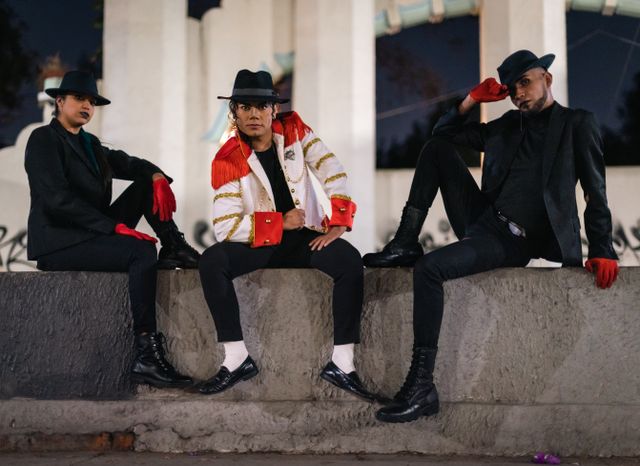
A Visual Moment from Michael Jackson's Story
Michael Jackson's career was built not only through recorded music, but also through movement, performance and visual storytelling. This video adds another visual element to the biography.
Video included as multimedia content for this educational article.
His Final Years
The final period of Michael Jackson's life was marked by financial, professional and personal pressures, alongside continuing interest in his music. He remained a major global celebrity even when he was no longer releasing albums as frequently as during his earlier career.
In 2009 he was preparing for a major concert series that was expected to mark his return to live performance. Rehearsals were taking place as plans for the shows developed.
The project later became known as This Is It. The documentary assembled rehearsal footage and became an important record of the performance preparation that preceded his death.
Michael Jackson's Death
Michael Jackson died on June 25, 2009, at the age of 50. UCLA Health reported that he was taken to Ronald Reagan UCLA Medical Center after suffering cardiac arrest at his home and that attempts to resuscitate him were unsuccessful. 6
The Los Angeles Police Department confirmed that officers responded to the medical center and the residence after his death, while noting that the county coroner would determine the cause of death. 7
The subsequent investigation determined that his death was caused by acute propofol intoxication, with the circumstances involving his physician becoming the subject of criminal proceedings. When writing about the death, it is important to distinguish the medical cause from the legal proceedings that followed.
His death shocked audiences around the world. The reaction demonstrated the extraordinary reach he had developed over more than four decades of performing.
What His Life Teaches Us
1. Talent Needs Discipline
Michael's career shows the importance of practice. His abilities did not appear fully formed on a single day. Singing, dancing, songwriting and performance developed through years of rehearsal and professional experience.
2. Success Requires Adaptation
Michael changed his sound repeatedly. The young Motown performer became a solo pop artist, then a visual innovator and later an artist responding to changing musical technology.
3. Collaboration Can Multiply Talent
His work with Quincy Jones, Rod Temperton, Steve Porcaro, Eddie Van Halen, Janet Jackson and many other collaborators shows that individual brilliance can become more powerful when combined with other people's expertise.
4. A Public Image Is Not the Whole Person
Michael's enormous public image sometimes made it easy for people to forget that he was also a private human being. His story is a reminder that celebrities experience fear, pressure, disappointment and uncertainty just like other people.
5. Innovation Requires Courage
Michael repeatedly took creative risks. He invested heavily in music videos, choreography and visual storytelling at a time when those elements were still developing as major components of pop promotion.
6. Childhood Matters
His experience demonstrates that professional success during childhood can have complicated consequences. Children need opportunity, but they also need protection, education, healthy relationships, rest and emotional support.
7. Music Can Carry Social Messages
Songs such as "Man in the Mirror," "Heal the World," "Earth Song," "Black or White" and "We Are the World" show how popular music can discuss social issues without becoming a political speech.
Why Michael Jackson Still Matters
Michael Jackson's influence is visible in contemporary pop performance. Artists continue to use elaborate choreography, cinematic music videos, theatrical concerts and carefully designed visual identities. The Rock & Roll Hall of Fame identifies performers including Beyoncé, Bruno Mars, Justin Timberlake, Usher, The Weeknd and others among artists influenced by Jackson. 8
His influence also reaches beyond individual artists. The modern expectation that a major pop release should have a strong visual identity owes something to the standards established during Jackson's career.
His music also remains accessible to new generations because the themes are broader than the period in which they were recorded. Love, fear, identity, discrimination, environmental damage, personal responsibility, loneliness and hope are not limited to one decade.
Remembering the Human Being Behind the Icon
It is easy to look at Michael Jackson only through the image of the "King of Pop." That title captures his cultural importance, but it does not tell the complete story.
Behind the stage costumes was a child who entered professional entertainment early. Behind the famous dance moves was a performer who practiced intensely. Behind the records were musicians, engineers, producers, songwriters and dancers. Behind the public image was a private individual who lived under extraordinary attention.
A balanced story therefore does not need to turn Michael into either a perfect hero or a simple villain. Human lives are more complicated than that. His accomplishments were extraordinary, his influence was enormous, and his personal history contained serious difficulties and controversies.
The most useful way to remember his career is to study all of those dimensions together. His music can be appreciated for its craftsmanship while his personal history can be discussed with evidence and care.
A Final Reflection
Michael Jackson's life began in an ordinary American industrial city and eventually became a global cultural story. He moved from family performances to Motown, from Motown to solo success, from successful records to revolutionary visual productions, and from extraordinary fame to a life surrounded by intense public attention.
His journey shows what can happen when exceptional talent meets discipline, opportunity, collaboration and ambition. It also shows the costs that can accompany extreme fame.
The strongest lesson may therefore be balance. Success matters, but health matters too. Recognition matters, but privacy matters too. Talent matters, but relationships matter too. Ambition can open doors, but people still need a life beyond their achievements.
Michael Jackson's music continues to invite discussion because it contains more than memorable sounds. Some songs invite dancing. Others invite reflection. Some tell stories. Others ask questions about society. Taken together, they provide a record of an artist constantly trying to change, communicate and remain relevant.
His story is ultimately a reminder that behind every famous name is a human life. Studying that life carefully allows us to appreciate the achievement without ignoring the person, and to learn from both the brilliance and the difficulties.
Sources and Further Reading
This article is an original educational interpretation written for Stories, Lives & Lessons. It does not reproduce another biography or copy another website's article. Historical facts have been checked against established reference sources.
- Rock & Roll Hall of Fame — Michael Jackson biography, career, influence and induction information. Read source
- Songwriters Hall of Fame — Michael Jackson biography and songwriting career. Read source
- Rock & Roll Hall of Fame — Jackson 5 history and induction information. Read source
- UCLA Health — statement concerning Michael Jackson's death and treatment at Ronald Reagan UCLA Medical Center. Read source
- Los Angeles Police Department — statement concerning the response to Michael Jackson's death. Read source
- Apple Music — Michael Jackson artist biography and album information. Read source