
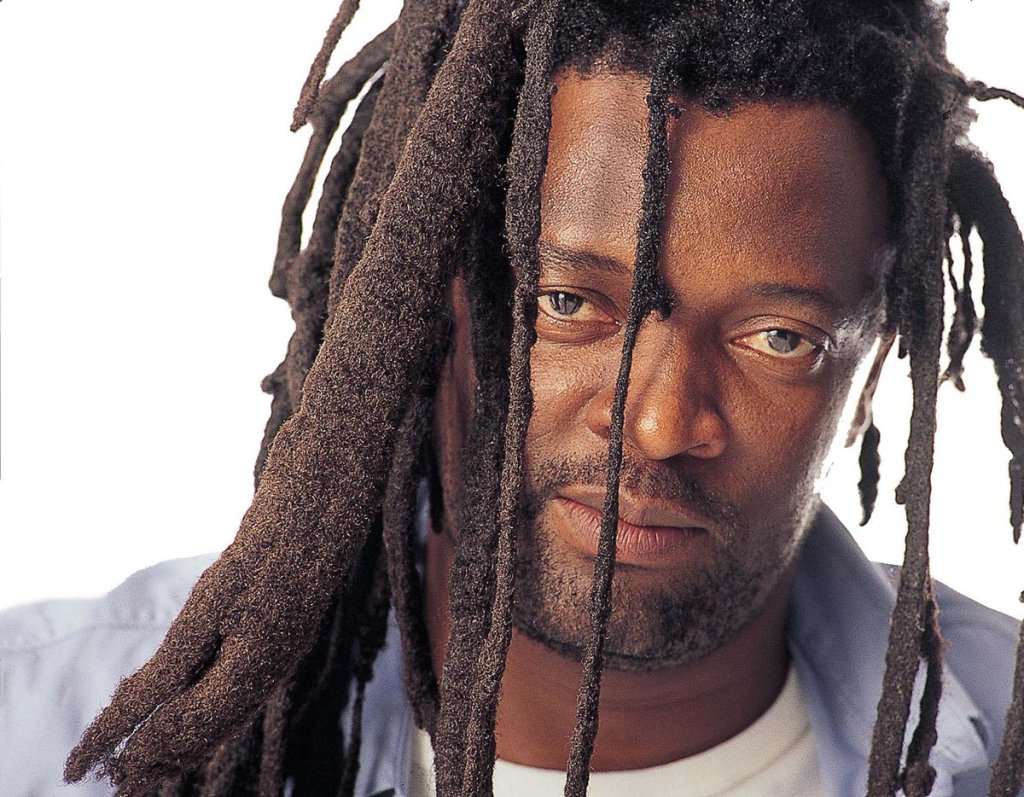
Lucky Dube's story is more than the biography of a musician. It is also a story about identity, social responsibility, perseverance, family, inequality, love, political change and the ability of music to communicate ideas to millions of people.
This article looks at his life in an educational way. The discussion of his songs focuses on their themes and messages rather than reproducing copyrighted lyrics.
1. Lucky Dube's Early Life
Lucky Philip Dube was born on August 3, 1964, in Ermelo, in what was then South Africa. He grew up during a period when South African society was deeply divided by apartheid.
The environment surrounding his childhood later became important when listeners tried to understand why social issues appeared so strongly in his music. Dube did not grow up in an environment where questions about race, inequality, opportunity and political power were distant ideas. They were part of the society around him.
As a young person, Dube developed an interest in music. His first musical experiences were not initially based entirely on reggae. He was influenced by the musical environment around him and became involved with traditional and popular South African sounds.
This beginning is important because it shows that an artist's final style can develop gradually. Dube eventually became internationally associated with reggae, but his musical identity was built through different stages.
2. Education and the Beginning of His Musical Journey
Dube became interested in music while he was still young. Like many artists, he had to develop confidence and practical experience before the world knew his name.
He became involved with a vocal group known as The Skyway Band. This period gave him experience as a performer and helped him understand the discipline required to work with other musicians.
His early recording career included mbaqanga, a popular South African style. At that stage, reggae was not yet the central sound for which international audiences would later know him.
His early records were commercially useful and helped him build an audience. However, he eventually began searching for a musical direction that allowed him to discuss deeper social questions.
That search became one of the most important turning points in his career.
3. Why Lucky Dube Turned Toward Reggae
Lucky Dube's movement toward reggae was not simply a decision to copy a popular international sound. Reggae offered him a musical language through which he could discuss social conditions, identity and political questions.
Reggae had already developed a strong reputation as music capable of carrying messages about justice, inequality, peace, spirituality and human dignity.
Dube found that this structure suited his own interests. He could use accessible melodies and rhythms while placing serious ideas inside the songs.
This helped distinguish him from artists whose primary goal was entertainment. Dube certainly created music that people could enjoy, but his catalogue repeatedly encouraged listeners to think.
4. The Rise of a South African Reggae Star
As Dube developed his reggae identity, his audience expanded beyond South Africa. His ability to combine reggae rhythms with African experiences gave the music a distinctive character.
He released a series of albums that gradually established him as one of the most important African reggae performers of his generation.
His music often dealt with themes such as apartheid, racism, poverty, migration, family, alcohol abuse, relationships, violence and the search for peace.
What made the approach effective was accessibility. A listener did not always need to study political history to understand the emotion inside a song.
A song could tell a story about an individual while also pointing toward a larger social problem.
This ability to connect the personal with the political became one of Dube's strongest artistic qualities.
5. His Musical Development
Lucky Dube's catalogue cannot be reduced to one message or one musical style. His work changed as his career developed.
The early part of his career was strongly connected to South African popular music. His later reggae work became more internationally recognised and allowed him to address broader questions.
This development demonstrates that artists can change without losing their identity.
Dube's voice remained central even as arrangements, themes and production changed.
His career also demonstrates the value of consistency. He continued creating music for many years rather than depending on one successful record.
6. "Prisoner" — A Story About Freedom and Responsibility
The central idea
"Prisoner" explores confinement, regret, family pain and the consequences of choices. The title immediately creates a picture of a person whose freedom has been restricted.
The song can be understood at two levels. At the first level, it tells a personal story about someone dealing with the consequences of actions. At a broader level, it encourages listeners to think about how decisions can affect families.
One reason the song remains memorable is that the subject is easy to understand. People do not need to experience prison personally to understand the idea of losing freedom.
The story also highlights responsibility. A person's choices can affect parents, partners, children and communities.
7. "Different Colours / One People" — Unity and Human Dignity
The central idea
The song challenges division between human beings. Its central message is that people may look different, come from different communities or have different backgrounds while still sharing a common humanity.
This theme became especially significant in the context of South Africa's history of apartheid.
Apartheid created legal and social divisions based on race. Dube's music challenged the thinking behind such separation by emphasizing human connection.
The song can also be applied beyond South African history. Modern societies still experience division based on ethnicity, nationality, religion, class, political identity and appearance.
8. "Together as One" — The Meaning of Unity
The central idea
"Together as One" promotes unity and questions social separation. The song reflects Dube's concern about a society divided by political and racial structures.
The power of the song comes from the simplicity of its central question: why should people allow differences to prevent them from living together?
The message is particularly important when examined historically. South Africa was going through enormous political change, and music became one way for artists to participate in public conversation.
Dube's approach was not simply to describe political events. He connected those events with ordinary human relationships.
9. "African Woman" — Respect and Identity
The central idea
"African Woman" celebrates African womanhood and identity. The song places cultural pride and admiration at the centre of its message.
The song can be interpreted as part of Dube's broader interest in African identity. His music frequently resisted the idea that African culture should be treated as inferior.
Cultural confidence can be important because people who understand their own history and identity are often better positioned to participate confidently in wider society.
10. "House of Exile" — Displacement and Political Reality
The central idea
"House of Exile" deals with displacement, political separation and the emotional consequences of being away from home.
The idea of exile has both political and emotional meanings. A person can be physically separated from home, but exile can also create a sense of loneliness and disconnection.
In the context of South African history, exile was an important experience for people involved in opposition to apartheid.
The song therefore connects personal emotion with historical experience.
11. "Victims" — Looking at Family Conflict
The central idea
"Victims" explores the effects of conflict inside families and relationships. Instead of presenting family problems as affecting only one person, the song encourages listeners to see how several people can suffer.
The concept of victims is important because conflict can spread. Arguments, violence, addiction, neglect and unhealthy relationships can affect children and other relatives who may not have caused the original problem.
12. "Respect" — Human Dignity
The central idea
The theme of respect appears repeatedly in Dube's work. Respect is not simply about politeness. It is connected to dignity, equality and the way people treat one another.
A society becomes healthier when people understand that another person's dignity should not depend on wealth, political power or social position.
13. What Made His Reggae Different?
Lucky Dube was influenced by reggae's international tradition, but he did not simply reproduce Jamaican music. He adapted reggae to African experiences.
His songs often contained references to realities familiar to African listeners. This helped create a bridge between an international musical style and local experiences.
That approach is important for creators today. Borrowing a form does not necessarily mean losing originality. A person can learn from an existing tradition and use it to communicate their own experiences.
14. His Music During the Apartheid Era
To understand Lucky Dube's social music, it is necessary to understand the historical environment in which much of it was created.
Apartheid was a system of racial segregation and political discrimination implemented in South Africa. It restricted where people could live, work and move and denied the majority population equal political rights.
Music became one of many ways South Africans expressed resistance, identity and hope.
Dube's songs did not always function as direct political speeches. Instead, he often used stories and accessible themes to communicate ideas about equality and dignity.
This approach made his music understandable beyond one political moment.
15. Becoming an International African Artist
Dube eventually became known far beyond South Africa. His records reached audiences in other African countries and international markets.
His international career demonstrated that African artists could address global audiences without abandoning African experiences.
He toured internationally and performed for audiences who connected with the emotional and social themes of his music.
His success also contributed to a wider recognition of African reggae as a serious artistic form.
16. Lucky Dube as a Father and Family Man
Outside the stage, Dube was also a father and family man. Public attention often focuses on musicians as performers, but a celebrity's private responsibilities can be very different from their public image.
Family was an important theme in several of his songs. His music frequently examined how individual decisions can influence relatives.
This gives his work another dimension. The messages were not only about governments and political systems. They were also about choices made inside homes.
17. His Music About Alcohol and Social Problems
Dube sometimes used music to examine alcohol abuse and its effects on individuals and families.
Instead of treating addiction as a simple moral failure, his stories could encourage listeners to think about consequences.
Substance abuse can affect employment, relationships, finances, parenting and physical safety.
The value of educational music is that it can start conversations before a person faces a serious crisis.
18. Love, Relationships and Emotional Lessons
Not all of Lucky Dube's work focused on politics. Love and human relationships were also important subjects.
His relationship songs demonstrate that social commentary and personal emotion can exist in the same catalogue.
Love songs can teach listeners about communication, loyalty, disappointment, trust and emotional responsibility.
The broader lesson is that a person's life cannot be divided neatly into politics, family and personal feelings. These areas influence one another.
19. Understanding the Meaning Behind His Music
The meaning of a song is not always limited to one interpretation. Listeners bring their own experiences to music.
A song about freedom may mean political freedom to one person and personal freedom from an unhealthy relationship to another.
A song about home may remind one listener of migration while reminding another listener of family.
This is why Dube's music continues to invite discussion.
Rather than treating every song as having only one correct answer, listeners can examine the historical context, the story being told, the emotions involved and the social question being raised.
20. What We Can Learn From Lucky Dube's Music
Lesson 1: Stand for human dignity
Dube repeatedly emphasized the value of human beings. His music encourages listeners to question systems and behaviours that reduce people to categories.
Lesson 2: Do not allow differences to create hatred
His messages about unity remain relevant because societies continue to experience division.
Lesson 3: Think about consequences
Songs dealing with prison, addiction and family conflict demonstrate that decisions rarely affect only the person making them.
Lesson 4: Know your identity
Dube's African identity remained visible throughout his international career.
Lesson 5: Use your talent responsibly
His music demonstrates that talent can be used to entertain while also communicating useful ideas.
Lesson 6: Change is part of growth
Dube's movement from early South African music toward international reggae demonstrates that artists can develop.
Lesson 7: Do not confuse popularity with purpose
Popularity can create an audience, but purpose determines what an artist chooses to communicate to that audience.
Lesson 8: Peace requires participation
Messages about unity are not useful if they remain only words. Individuals must also practice respect and cooperation.
Lesson 9: Family matters
Several of Dube's stories remind listeners that personal decisions can have consequences for relatives.
Lesson 10: Music can educate
A song can communicate historical and social ideas in a form that people remember emotionally.
21. Lucky Dube's Career in Perspective
Lucky Philip Dube is born in South Africa.
He develops as a musician and records South African popular music before becoming strongly associated with reggae.
He increasingly uses reggae to communicate social, political and personal messages.
His music reaches audiences across Africa and other parts of the world.
Dube remains one of Africa's major reggae performers and continues releasing music and touring.
Lucky Dube is fatally shot in Johannesburg during a carjacking. He was 43 years old.
22. The Tragic Death of Lucky Dube
Lucky Dube was killed on October 18, 2007, in Johannesburg, South Africa, during a carjacking.
His death shocked South Africa and many of his international listeners.
The tragedy came while his career was still active. He had spent decades building a body of work that connected entertainment with social commentary.
His death also became a painful reminder of the security and crime problems that affected South African society.
It is important not to allow the circumstances of his death to become the entire story of his life. His life included music, family, creative development, international performances and a large body of work.
A person's final moment should not erase the years of effort, creativity and influence that came before it.
23. Lucky Dube's Legacy
Lucky Dube's legacy is carried through his recordings, listeners, musicians and the social conversations his songs continue to inspire.
His work demonstrated that reggae could become an effective vehicle for African stories.
He also demonstrated that serious social commentary did not require music to become inaccessible.
A strong rhythm could attract listeners while the message encouraged them to think.
This combination helped make his work durable.
For younger musicians, his career provides an example of how artistic identity can be developed from local experience and then communicated internationally.
24. Why Lucky Dube Still Matters Today
Many of the problems Dube addressed have not disappeared completely. Societies still struggle with inequality, discrimination, violence, family conflict, addiction and political division.
The exact circumstances may change, but the human questions remain.
Who deserves respect? How should people treat those who are different? What responsibilities do individuals have toward families? How can communities live together peacefully? What happens when personal decisions harm others?
These questions help explain why old music can remain relevant.
A song survives when its emotional or intellectual message can still connect with new listeners.
25. Music as a Form of Education
Lucky Dube's career offers an important example of informal education. Not every lesson is learned inside a classroom.
People can learn from stories, films, conversations, books and music.
A well-written song can introduce a listener to an unfamiliar historical issue. It can make someone curious enough to research the subject further.
Dube's music can therefore be used as a starting point for discussions about South African history, African identity, equality, family, relationships and personal responsibility.
The best approach is not to treat music as a replacement for education, but as a doorway into deeper learning.
26. What Young People Can Learn From His Career
Young people can learn several practical lessons from Dube's journey.
First, skill development takes time. His international success did not appear immediately.
Second, originality matters. He developed an African interpretation of reggae rather than simply becoming a copy of another artist.
Third, a career can evolve. His early musical direction was different from the reggae identity that later made him famous.
Fourth, success can be used to communicate ideas. Having an audience creates an opportunity to contribute to conversations that matter.
Finally, a person's background can be an advantage. Experiences that once seem ordinary can become the source of distinctive creative work.
27. What Musicians Can Learn From Lucky Dube
Musicians can study Dube's career as an example of adaptation.
He entered the industry through one musical environment and later developed a strong reggae identity.
He also understood that songs can tell stories.
Instead of relying entirely on technical performance, he connected music with subjects listeners recognized from everyday life.
Another lesson is consistency. A long career requires continued learning, recording, performing and adapting.
28. What Entrepreneurs Can Learn
Although Lucky Dube was primarily known as a musician, his career also offers lessons for entrepreneurs.
He developed a recognizable identity and maintained consistency in his work.
He also understood his audience.
Entrepreneurs can apply the same principle by identifying the people they want to serve and understanding their problems.
A successful product or service should not only exist; it should solve a problem or provide value.
29. The Bigger Meaning of Lucky Dube's Story
Lucky Dube's life can be viewed through several connected ideas: identity, opportunity, creativity, responsibility, social awareness and perseverance.
He began in South Africa and eventually became an international reggae figure.
His journey demonstrates that a local story can become globally meaningful.
His music also demonstrates that entertainment does not have to be empty of purpose.
A person can dance to a rhythm and still think about the message. A listener can enjoy a melody and later ask a serious question.
That combination is one of the reasons Dube's work deserves to be studied rather than remembered only as nostalgic music.
30. Conclusion: The Lessons Left Behind
Lucky Dube's story began in South Africa and developed into an international musical journey. His career passed through different styles before reggae became the central language through which he reached a worldwide audience.
His music discussed subjects that remain relevant: equality, family, freedom, identity, relationships, addiction, responsibility and peace.
The most important lesson may be that talent becomes more meaningful when it is connected to purpose.
Dube could entertain audiences, but he also challenged them to think. He used music to describe human experiences and social problems in ways that ordinary listeners could understand.
His death was tragic, but his work did not end with the circumstances of that night.
Every time a listener examines one of his messages, discusses its meaning or discovers his music for the first time, another part of that artistic legacy continues.
Sources and Further Reading
This article is an original educational interpretation. Readers who want to verify biographical and historical information can consult reputable reference sources.
- The Recording Academy / GRAMMY
- Encyclopaedia Britannica
- South African historical and archival resources concerning apartheid and the development of South African music.
- Official and reputable music-industry databases for album and career information.
Song discussions in this article describe themes and interpretations. The article does not reproduce complete song lyrics.